CoMo Brick & Mortar Project
CoMo Brick & Mortar is a collaborative digital public history project documenting the architectural history of Columbia, Missouri. Supported by CoMo Preservation and The District it connects students, scholars, and community partners to make local history more accessible and to support historic preservation.
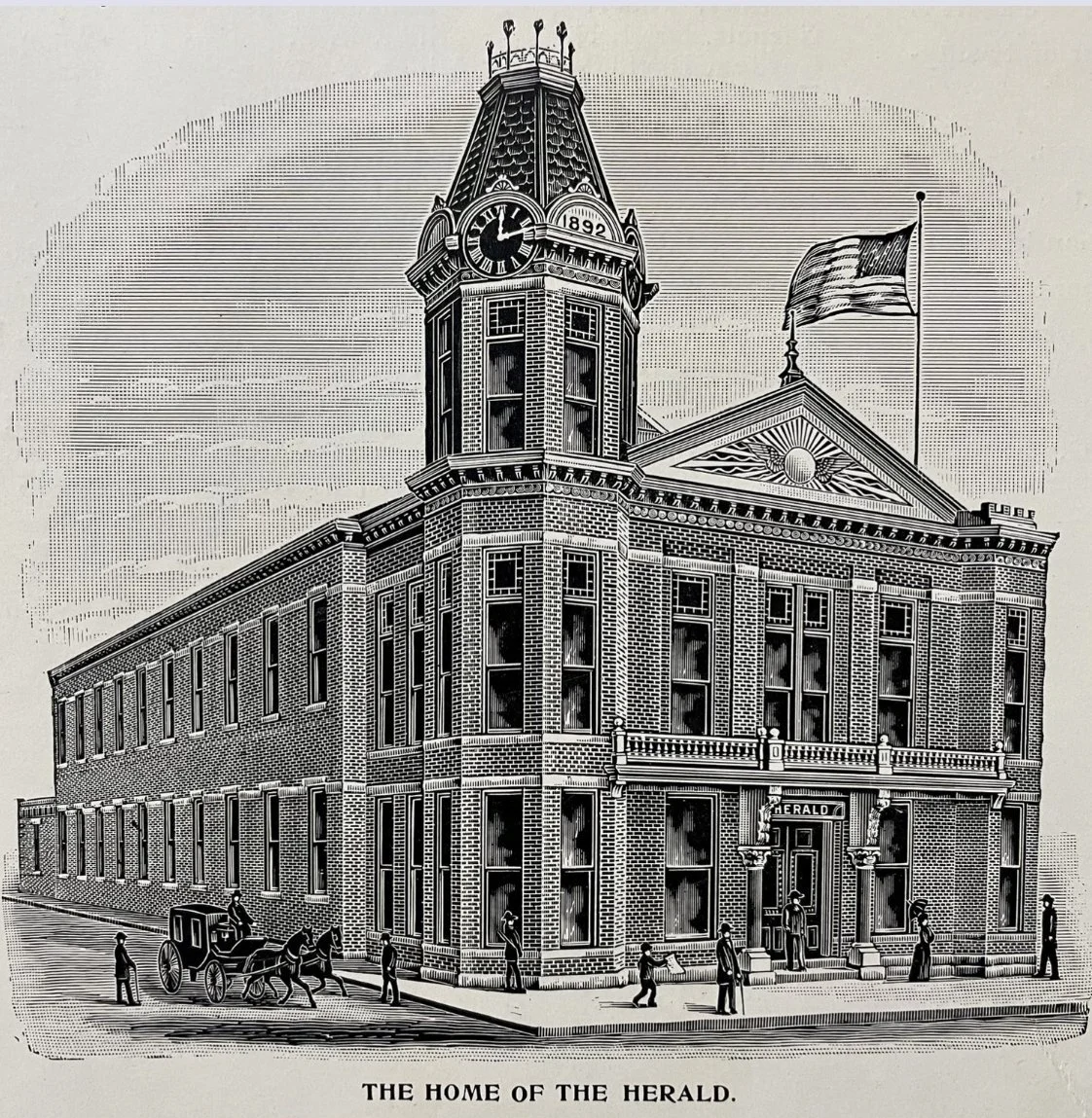
The Herald Building, 1892 (1020 E BROADWAY)
E.W. Stephens, Walter Williams, and the Missouri School of Journalism are all famous in Columbia. They have in common this fantastic Victorian-style commercial building, built for E.W. Stephens’ Columbia Herald newspaper and the associated E.W. Stephens Publishing Company. Many thousands of books were printed here, along with local newspapers, school yearbooks, and law records for several states. In 1900 this was the largest private employer in the City of Columbia. The ornate clock tower once held a steam whistle that not only told the time, but communicated the weather forecast. Walter Williams was first hired by Stephens to be the editor of the Columbia Herald and it is likely here that plans were made to create the world’s first school of journalism. Later the building was home to the first location of Slackers Games and is now mixed use, with business on the first floor and apartments on the second.
Howard Municipal Building, 1932 (600 East Broadway)
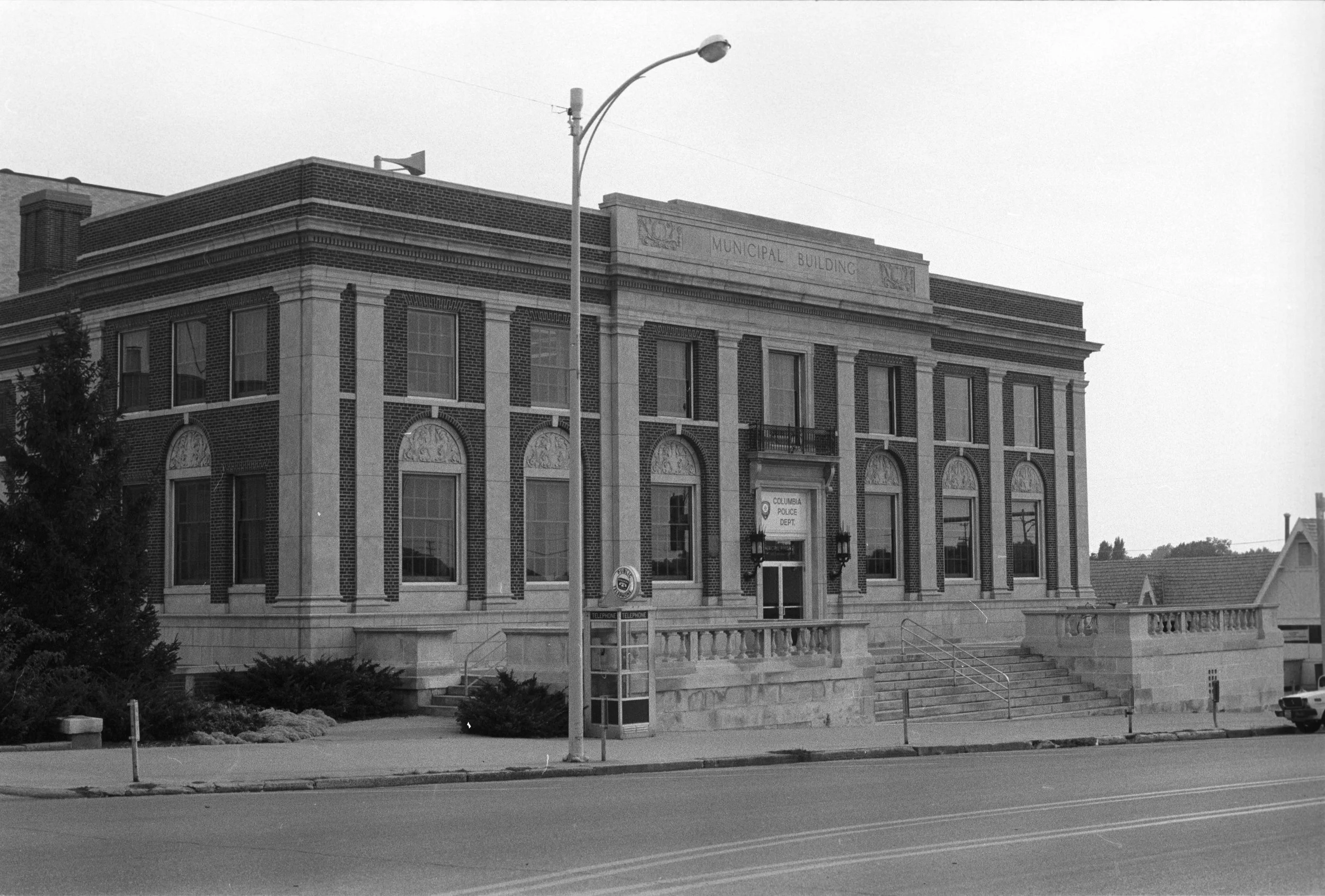
Built in a grand Beaux-Arts style, the Howard Municipal Building, or just the Municipal Building as it was originally called, holds an important spot in the history of Columbia city government. The structure was designed by famed regional architect Edmund Eckel, his partner Will S. Adrich, and local architect of note Harry Satterlee Bill. Eckel especially influenced the facility’s final architectural design. Having been born in France, Eckel was educated in architecture at the Beaux-Arts de Paris, where he was thoroughly infused with the Beaux-Arts style of architecture for which he would become known.
The Crane-Cho Building, circa 1900 (910 E Walnut St)
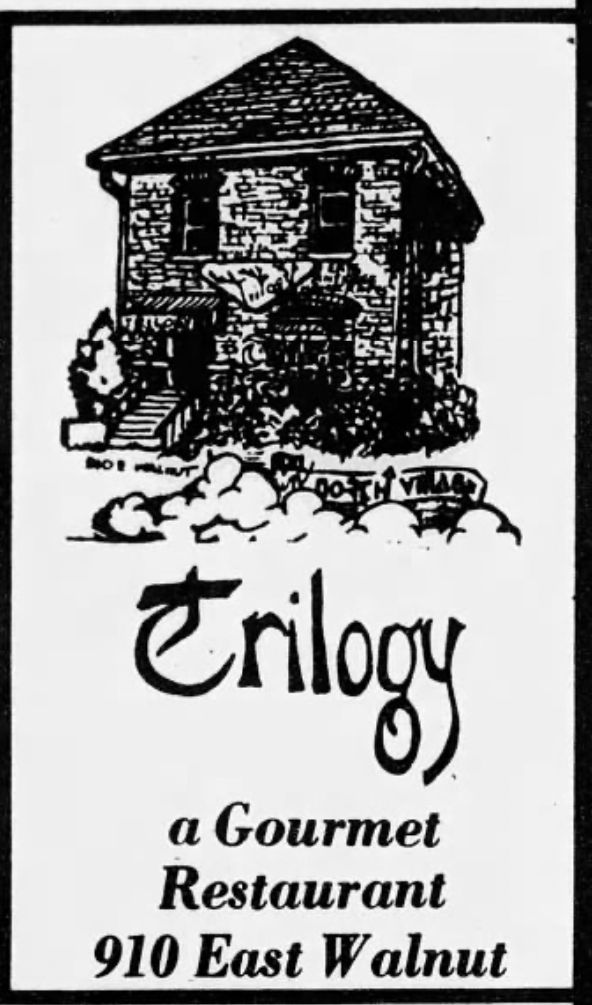
The brick house at 910 East Walnut Street stands out as the last remaining historic home in downtown Columbia. Built in the early twentieth century, it reflects the kinds of residential buildings that once scattered Columbia before commercial development reshaped the area. The two-story structure features red brick, a slightly raised foundation, rectangular windows, a small stained-glass accent, and a large front porch reached by a short set of steps. Its hipped roof and balanced, boxy form are characteristic of the American Foursquare style, a popular design in the early twentieth century known for its straightforward layout and efficient use of space. The building has functioned as a residential and commercial space illustrating the development of downtown Columbia and the blending of living and commercial uses as the city has expanded and changed.
M.K.T. Railroad Passenger Depot, 1909 (402 East Broadway)
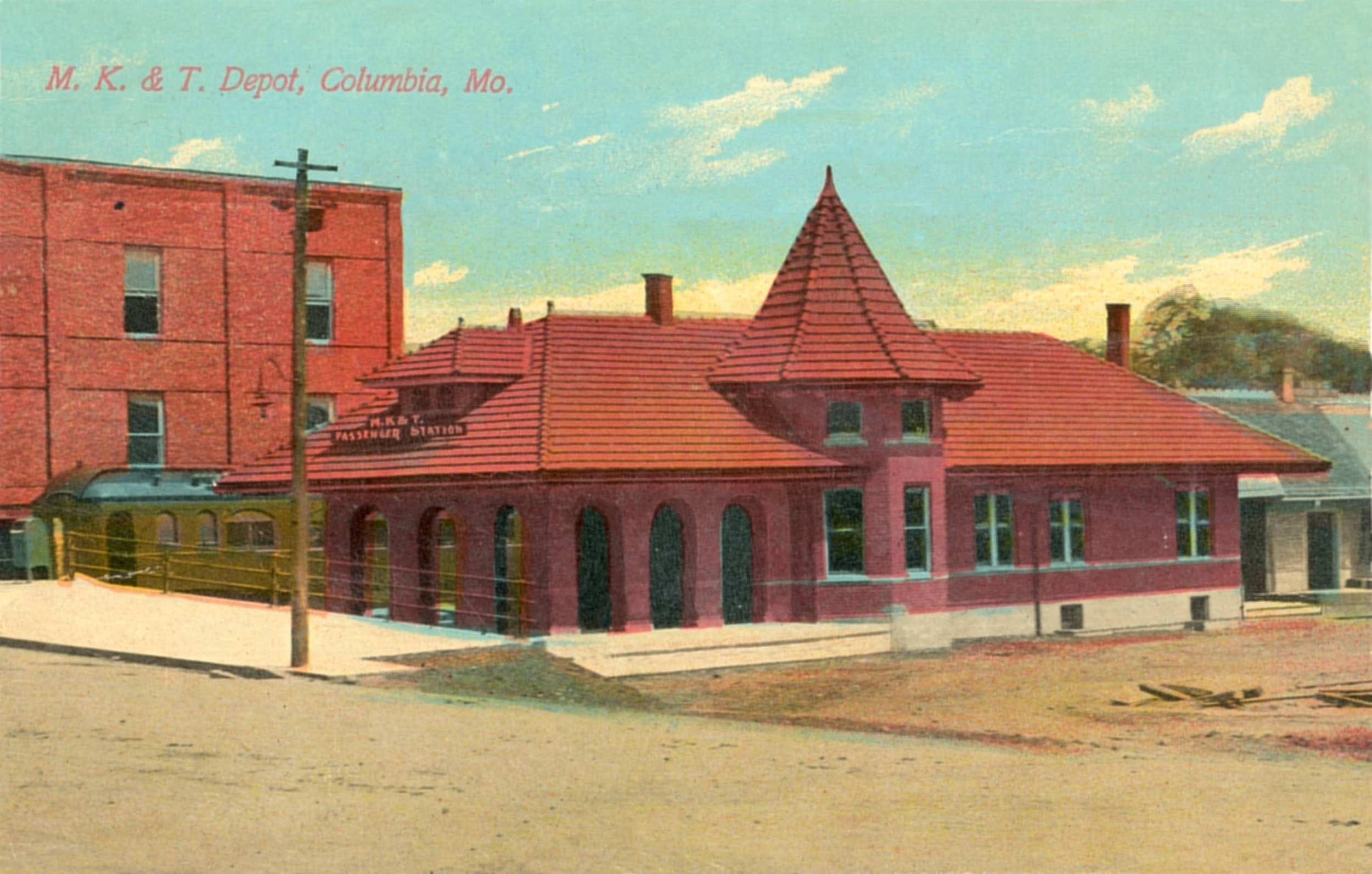
The second station to open in downtown Columbia, the Missouri-Kansas-Texas (M.K.T.) Railroad Passenger Depot, colloquially known as Katy Station or Columbia Station, finished construction in 1909. Construction of the branch line connecting Columbia to the main line at McBaine had started years earlier in 1882 during a period of rapid and substantial growth for the M.K.T. Railroad. Columbia’s first M.K.T. depot opened in 1901 upon the completion of the branch line as little more than a siding by Boone County Milling Company on the corner of North Fourth and Broadway. Likely built as a temporary measure, the depot’s small size (72.5x18 feet) soon proved inadequate and in 1907 plans were drawn up for the construction of a new depot on the corner of South Fourth Street and Broadway. Initially projected to cost $32,000 by M.K.T. officials, Katy Station would begin operation in April 1909 having cost the company $40,000 instead. By late 1909, the station was fully operational and celebrated by offering a ”State Fair Special” ticket on the cheap that took Columbians to the Sedalia State Fair in early October. According to the Columbia Missouri Herald, the modern view of Katy Station, alongside a new $80,000 building for the local high school, gave Columbia a “lively appearance” that rejuvenated the appearance of the town center.
The Hall Theater, 1915 (100 S 9th St)
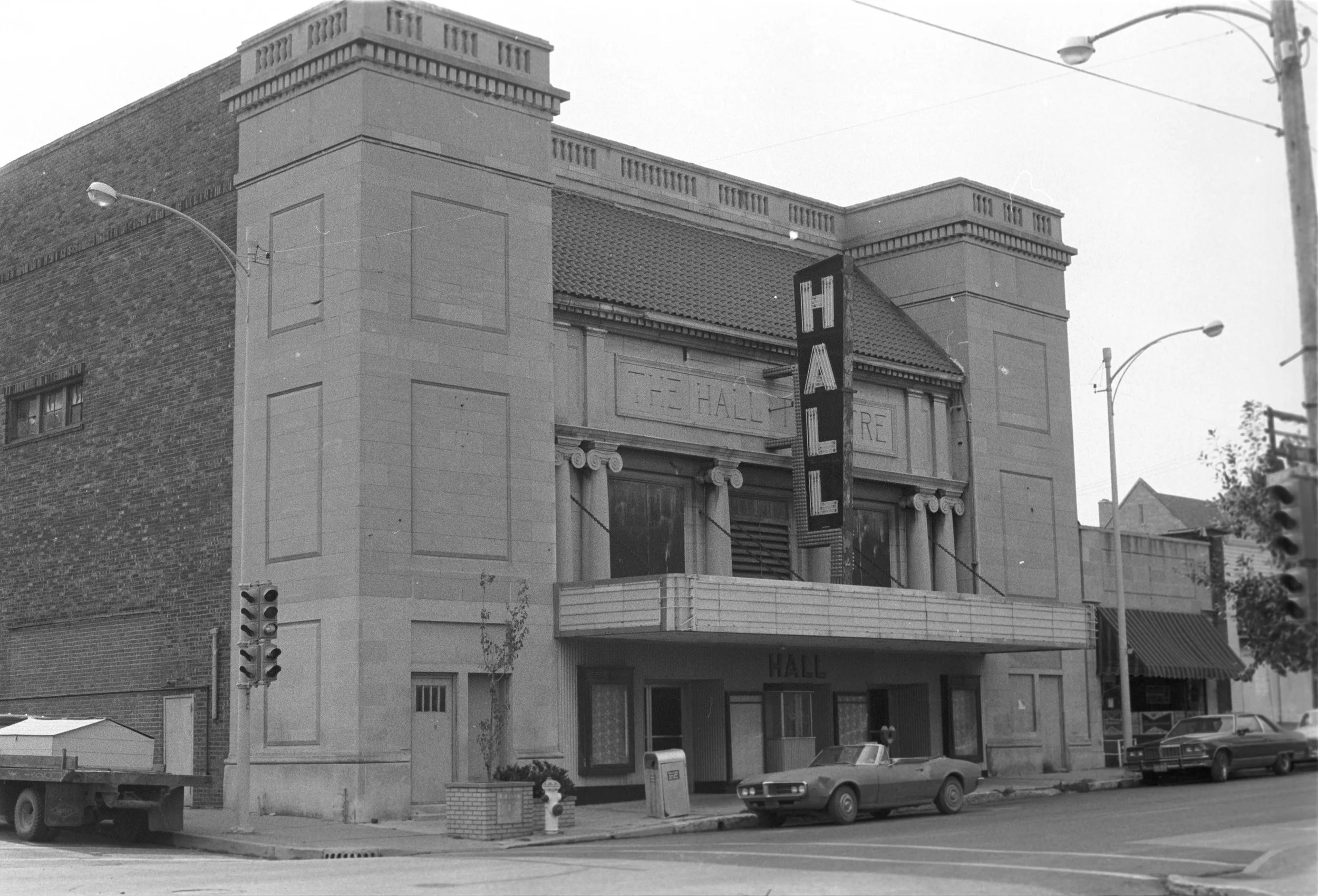
With a classical limestone facade bearing its name above 9th Street, The Hall Theater is an impressive building amongst the shops and sights of historic downtown Columbia, Missouri. Thomas C. Hall, a well-known businessman and theater operator, began its construction in 1915. To help him with this task, Hall contracted with the Boller Brothers, two influential brothers who were respected architects from Kansas City. The Boller Brothers, whose works eventually included nearly one hundred other theaters across the United States including the more famous Missouri Theatre, made quick work of the job. Thomas Hall paid for a majority of its construction with much of the material being locally sourced. Many companies, such as the Bowling Lumber Company, proudly promoted their work in establishing Columbia’s new theater in an August 27, 1916 issue of the The Daily Missourian, just prior to the Hall’s opening. The Hall’s exterior architecture takes inspiration from classical Greek and Roman buildings. This style, evident by the 6 Bedford limestone pillars at its entrance, was popular with the Boller Brothers and movie theaters in general. The theater’s interior was considered top of the line, with electric lighting and an impressive screen. The new feature most important to the patrons of the theater was its state of the art heating and cooling system. Cool air was blown over ice and through vents in the orchestra pit and under each seat, with hot air rising through windows in the top of the theater.
The Tiger Hotel, 1927 (100 S 9th St)
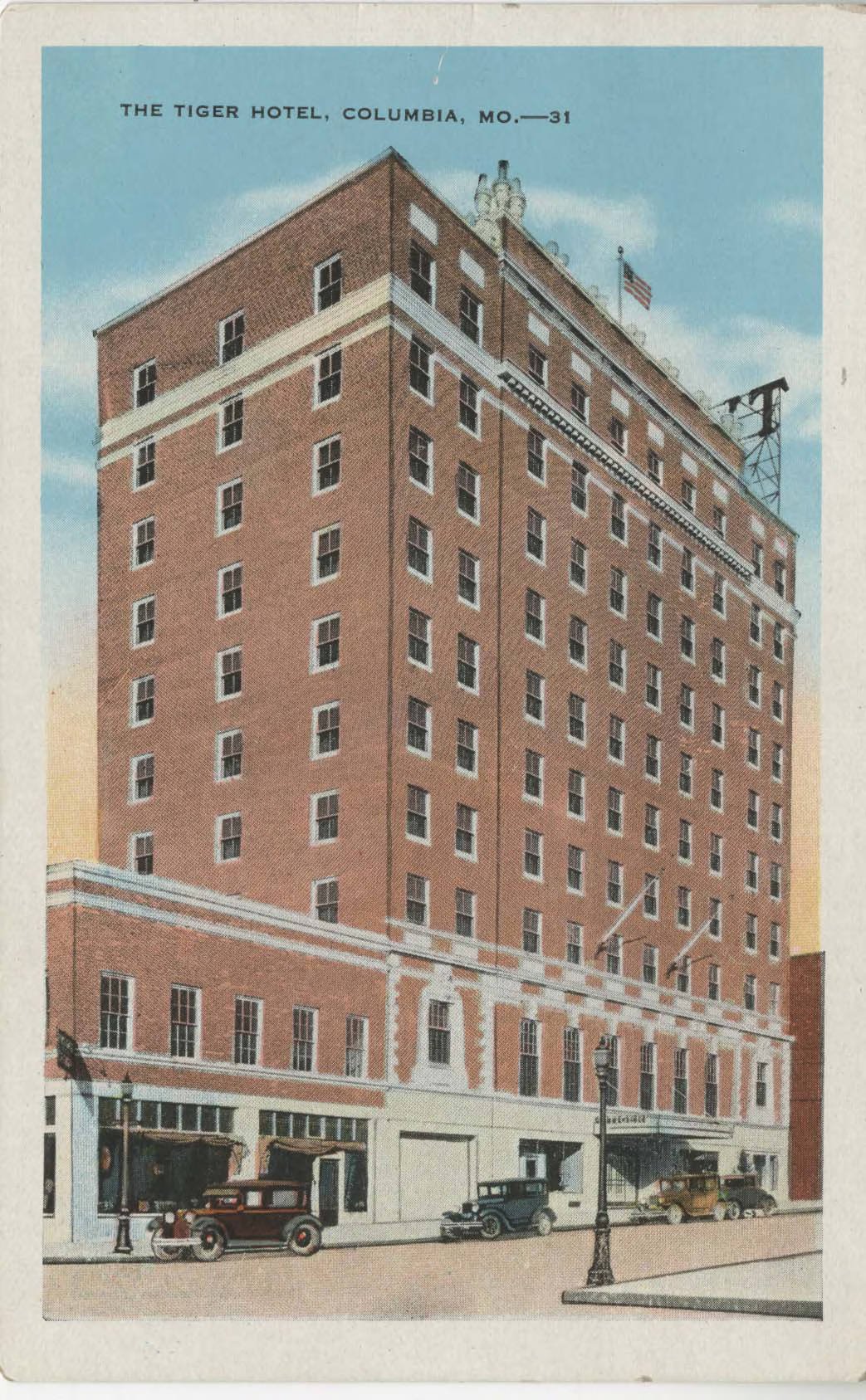
The Tiger Hotel is one of Columbia’s tallest and most recognizable buildings. It opened in 1928, occupying a prime location on The Avenue of the Columns (8th) between Columbia’s business district and the University of Missouri. It boasted a large ballroom, a private dining room, a large coffee and tea cafe, and included three spaces for “hotel-quality” shops fronting 8th Street. The Tiger Hotel name was chosen to represent the spirit of the University of Missouri and the City of Columbia. It was well-chosen, for it was in the middle of 8th and Broadway that during the civil war a homeguard built a blockhouse to protect Columbia from Confederate guerrillas intent on burning down the city. The famous neon Tiger Hotel sign was mounted atop the 9 story building, facing North, to advertise to travelers who would be able to see it from the newly built U.S. Highway 40 (now Business Loop), the nation’s transcontinental highway